How Often Should Your Child Practice? We Think You Should Call It Play
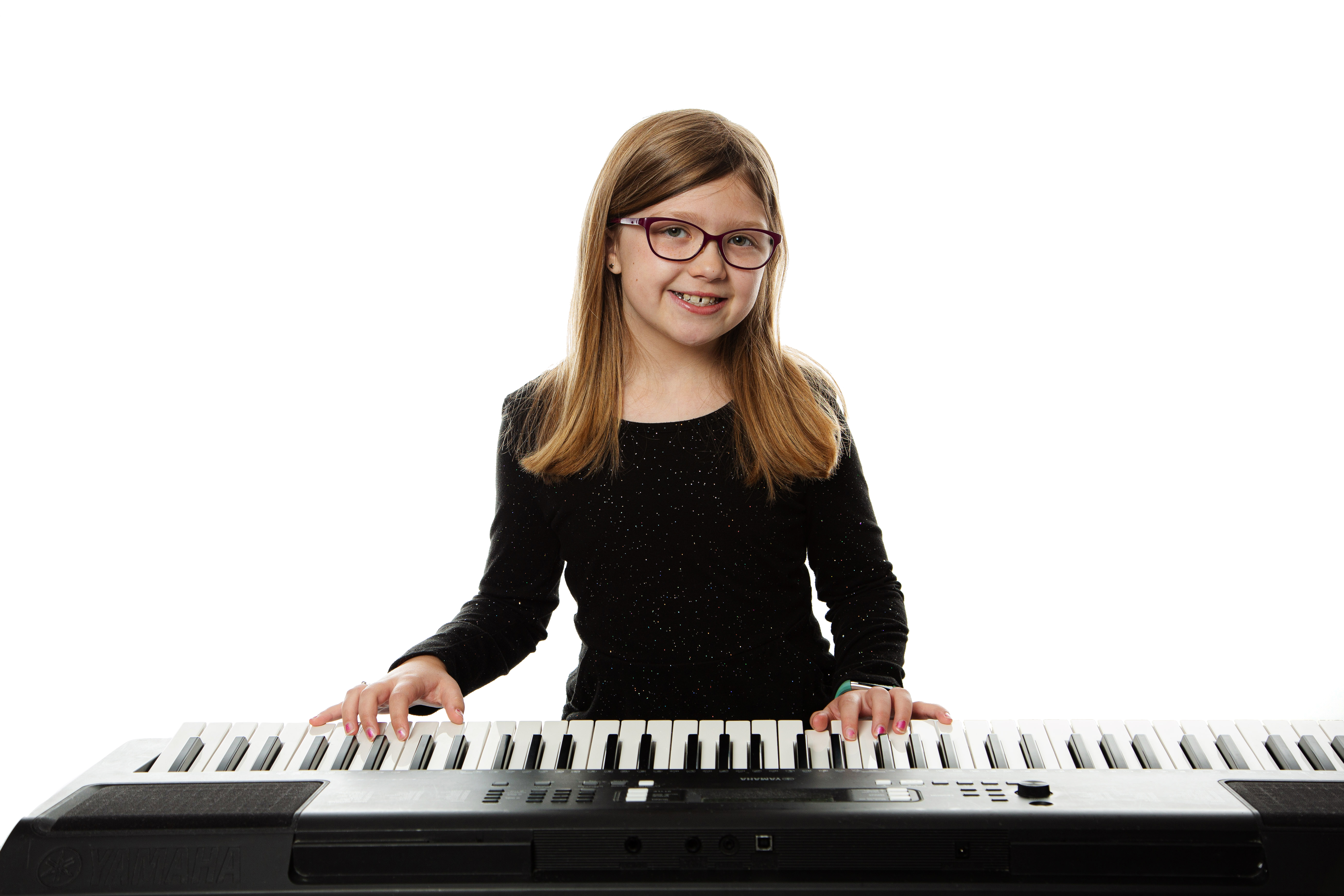
If you're looking into music lessons in Littleton, CO for your child, there is a good chance you've already thought about the practice question.
“How often should they practice?”
It's a fair question.
But we might suggest looking at it a little differently.
What if instead of asking your child to practice their instrument, you asked them to play?
It sounds like a small change.
It actually can make a pretty big difference.
At Littleton School of Music, we believe music should be fun first. Before we're worried about how many minutes a child spends at the piano, how many scales they played on guitar, or whether they completed every assignment, we want them to enjoy making music.
Because if they enjoy it, they are much more likely to keep doing it.
And that's where the real progress happens.
Think about the word “practice.”
For adults, it can sound like something we're supposed to do.
Something on the list.
Something we need to get through before we can do what we actually want to do.
Kids already have plenty of that.
They have homework.
They have chores.
They have school projects, sports, activities and all the other things that fill up a week.
Music doesn't need to become another one.
When a child sits down at the piano and plays a song they love, that's still learning.
When they pick up their guitar and try to figure out a favorite song, that's still learning.
When they sing a song in the car for the hundredth time, that's still learning too.
We'd rather help children fall in love with playing music than teach them to dread practicing it.
This is where managing expectations becomes really important.
There isn't one magic number of minutes that works for every child.
A young beginner might happily play for 10 minutes.
Another child might play for 30 minutes without realizing how much time has passed.
And some days?
Your child may not want to play at all.
That's okay.
If your child is just beginning piano lessons, guitar lessons, voice lessons, drum lessons or another instrument, we don't want to create the expectation that they should immediately sit down for an hour every day.
That can be a lot to ask of a beginner.
Instead, start small.
Give them something they can succeed at.
Let them experience the feeling of:
“Hey, I can do this.”
That feeling is much more valuable than checking a box that says “30 minutes practiced.”
This is probably the biggest difference between our approach and the way many people think about learning an instrument.
Of course, repetition matters.
Of course, students need to work on challenging things.
Of course, learning an instrument takes time.
But we don't want the amount of time spent practicing to become the goal.
The goal is to become a musician.
And musicians play.
As children become more comfortable with their instruments, something wonderful can happen.
They start picking it up on their own.
They play a song they heard on the radio.
They try a new chord.
They make up a melody.
They show a parent something they learned in their music lessons in Littleton.
They make mistakes.
They laugh.
They try again.
That might not look like traditional “practice.”
But it is exactly the kind of experience that can keep a child connected to music for years.
Parents naturally want their children to succeed.
That's a good thing.
But sometimes our expectations can accidentally take some of the fun out of learning.
A child has been taking piano lessons for three months, so we wonder why they can't play a complicated song yet.
A child starts guitar lessons and we expect them to practice every single day.
A child takes voice lessons and suddenly we're counting how many minutes they spent singing.
It's easy to do.
We all want to know that the time and money we're investing is paying off.
But learning music isn't always a straight line.
Some weeks your child will make huge progress.
Other weeks, it might feel like nothing is happening.
That's normal.
Children are learning more than just notes and chords. They're learning how to listen, coordinate their hands, remember patterns, solve problems and stick with something that's difficult.
And that takes time.
Let them.
Seriously.
If your child sits down and plays their instrument for ten minutes because they wanted to, that's a win.
Maybe tomorrow it's 15 minutes.
Maybe next week they become obsessed with a song and play for 45 minutes.
You don't necessarily need to push for a specific number.
You want to create an environment where playing music feels good.
This is particularly important for younger children.
If their first experience with music is:
“You haven't practiced enough.”
they may eventually start thinking of music as work.
We'd much rather they hear:
“Want to show me what you learned?”
That's a very different experience.
Parents don't need to be musicians to support their child's music education.
Actually, one of the best things you can do is simply be interested.
Ask questions.
Listen.
Let your child perform for you.
Play music in the house.
Go see live music together.
Let them choose a song they like.
And when they make progress, notice it.
You don't have to say, “You practiced for 20 minutes today.”
You can say:
“That sounded really good!”
Or:
“I remember when that chord was hard for you.”
Or even:
“I love hearing you play.”
Those comments reinforce something much more important than a practice schedule.
They tell your child that music is something worth enjoying.
Some students do need structure.
And that's okay too.
Especially as students get older and become more advanced, they may have specific goals.
They might want to prepare for a recital.
They might want to audition for something.
They may be preparing for a school music program or simply want to become a stronger musician.
In those situations, a teacher may recommend a more structured routine.
But even then, we'd encourage students to keep some room for fun.
Work on the difficult song.
Then play something you love.
Practice your scales.
Then mess around with a melody.
Work on technique.
Then play just because you feel like it.
There is room for both.
The idea of “play first” works across instruments.
With piano lessons in Littleton, a student might spend time learning a song they chose themselves.
With guitar lessons in Littleton, they might learn a riff from a favorite band.
A student taking voice lessons might sing music they already enjoy listening to.
A beginning drummer might simply have fun finding different sounds and rhythms.
The instrument may change.
The philosophy doesn't.
Enjoyment comes first.
This one is worth remembering.
Every child learns differently.
One student may pick up an instrument quickly.
Another may need more time.
One child may want to perform in front of everyone.
Another might be perfectly happy playing quietly at home.
One student may practice every day.
Another may go through periods where they barely touch their instrument.
That doesn't mean one child is going to become a better musician.
It means they're different people.
When families are searching for the best music lessons in Littleton, it's worth finding a teacher who understands that.
A good teacher isn't just teaching notes.
They're teaching a person.
It happens.
And it doesn't necessarily mean music lessons were a mistake.
Sometimes a child needs a different song.
Sometimes they need a different approach.
Sometimes they need a little break.
Sometimes they discover that they like another instrument better.
That's all part of the process.
The goal isn't to force a child to love one particular instrument forever.
The goal is to help them discover whether music can become something meaningful in their life.
Sometimes that takes a little experimenting.
That's okay.
Imagine two children.
Child A sits at the piano every night for 30 minutes because they're required to.
Child B sits down three times this week because they really want to learn a song they heard.
Which child is having more fun?
Which child is more likely to keep playing next year?
We can't predict exactly where either child will end up.
But we'd bet on the child who enjoys making music.
Because music lessons should create musicians, not just good practice habits.
If you've been searching for music lessons near me, Littleton music lessons, or a welcoming music school in Littleton, CO, we'd love to help your child get started.
At Littleton School of Music, students can explore piano, guitar, voice, drums, violin, cello, bass, ukulele, brass, woodwinds and more.
Our goal isn't to make music another chore on your child's schedule.
We want to help them discover the joy of playing.
Because the best kind of practice is the kind where your child forgets they're practicing.
They're just playing.
And having fun.
As parents, it's easy to worry.
Are they practicing enough?
Are they progressing fast enough?
Are we doing this right?
Try not to worry about all of it.
Give your child room to explore.
Give them realistic expectations.
Celebrate the little victories.
Let them play songs they love, even when those songs aren't necessarily the ones their teacher assigned.
And remember that learning an instrument is a journey.
There will be frustrating days.
There will be exciting days.
There will be days when your child surprises you.
That's all part of it.
Fun first. Progress second.
Because when kids enjoy playing music, they have a reason to keep coming back to it.
And that's something worth building on.
If you're looking for music lessons in Littleton, CO for your child, reach out to Littleton School of Music.
Whether they're interested in piano, guitar, voice, drums, violin or another instrument, we're happy to help you find a good place to begin.
Call or text Littleton School of Music at (303) 972-7625 to learn more.
Come learn with us.
And most importantly, come play.
Sign up is easy and parent-friendly, with helpful staff at the front desk seven days a week to serve you. Because we only offer lessons on a month-to-month basis, there are no large upfront payments, no complicated contracts, no annual material or performance fees, and no semester minimums.
Lessons are first come, first serve, so contact us today to arrange your first lesson!
Lessons are available seven days a week, and scheduled once a week.
A one-time registration fee is $25 (due only at time of registration).

